Should I Keep Renting or Buy Now in Calgary?
Should I keep renting or buy now in Calgary?
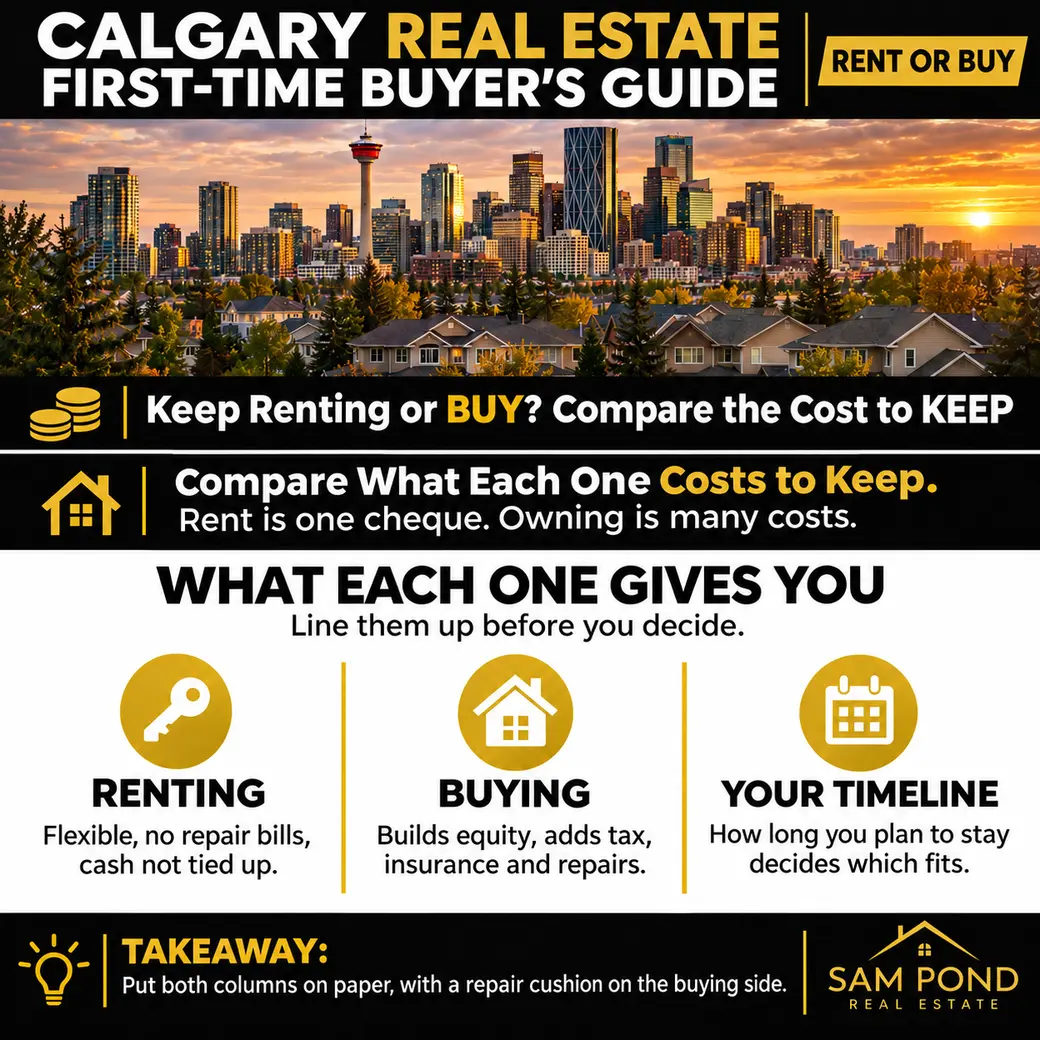
The honest answer is that it depends on what each one costs you to keep, not just what each one costs you each month. Rent looks like one number. Owning looks like many. That's why the two are so hard to compare, and why so many renters feel stuck.
The worry underneath this question is usually "am I wasting money on rent?" or "what if I buy and can't keep up?" Both are fair. The way through is to line the two up on paper, honestly, before you decide anything.
Why renting and buying are hard to compare
Your rent is one cheque. A home has a mortgage payment, but that's only part of it. Some of that payment is interest, which is gone the way rent is gone. Some of it is principal, which is you paying yourself back. Then there's everything else a landlord handles for you today.
So the useful question isn't "is my payment lower than my rent?" It's "what does each choice cost me to keep, and what do I have left at the end?"
What you pay to keep a home that rent already covers
When you rent, your landlord pays for a lot of things you never see. When you own, they become yours.
- Property tax. Paid by the owner, every year.
- Home insurance. Renters have a small policy. Owners carry a bigger one.
- Condo or townhouse fees, if you buy that type of home. These are monthly and they can change.
- Repairs and replacements. The furnace, the hot water tank, the roof, the windows. When you rent, you phone the landlord. When you own, you phone a contractor and write the cheque.
- Utilities and upkeep, which are often partly or fully included in rent for some rentals and never included when you own.
I have owned rental properties for years, and I've been the one writing those cheques. That's the side of owning people most often underestimate. The payment is the part you can see. The repairs are the part that surprises you.
I recently helped one of my former tenants purchase their first home. It was always their dream to be homeowners and I guided them through the process and explained the pros and cons of each: staying a tenant or becoming a homeowner. In the end, we found a house with a legal basement suite, which they purchased, and they became homeowners and a landlord at the same time. This was a perfect fit for them as they will initially rent the basement suite but plan to have their parents move in as they get older.
What owning can give you that renting can't
- Principal you build up. The part of your payment that pays down the mortgage is yours, in a way rent never is.
- Stability. No notice to move because the landlord is selling, and a payment that doesn't jump at renewal if you have a fixed term.
- Control. Paint the walls, plant the garden, stay as long as you like.
And what renting gives you that owning can't: flexibility to move, no big-ticket repair bills, and the cash you haven't tied up in a down payment. If your job or plans are uncertain, that is a real advantage.
Neither one is the smart answer for everyone. The right one is the one that fits your next five years.
Try this on paper
You don't need a spreadsheet model. Make two columns:
- Keep renting: your rent, renter's insurance, plus what you'd do with the money you aren't putting into a down payment.
- Buy: the mortgage payment, property tax, insurance, any fees, and a repair cushion for the first few years.
Here's a made-up example to show the shape, not a quote. Say your rent is $1,800 a month. A home might have a payment, tax, insurance and fees that add up to a number higher than that, and then a repair cushion on top. The question isn't whether the buying column is bigger. It usually is. The question is what you get for the difference, and whether you can carry it comfortably.
Whenever I talk with renters who think they are ready to buy, they often haven't considered the full picture in the cost of buying. They generally look at their rent, go online, check a mortgage calculator, and think they can afford the same mortgage payment as their current rent payment or they have a number in their head where they assume they qualify.
Where a home with a legal suite fits
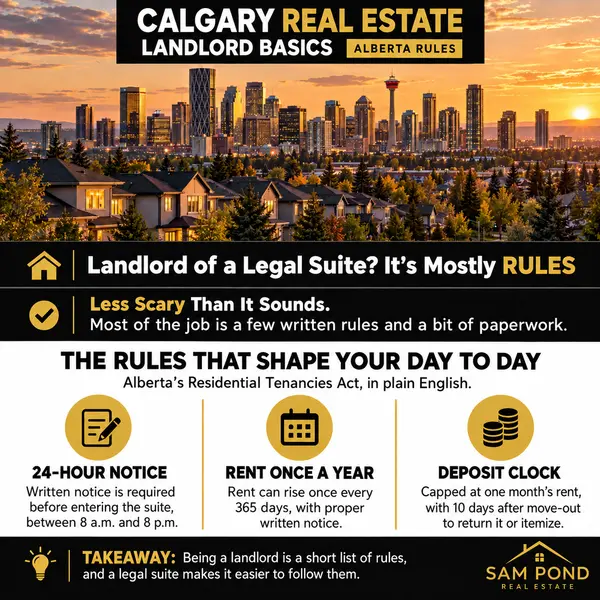
If buying looks like a stretch, one option some renters look at is a home that already has a legal suite. The rent from the suite can help carry the cost of owning. It isn't for everyone, because it means being a landlord. If that sounds like you, I wrote about what that looks like in What Being a Landlord Actually Looks Like When You Own a Calgary Legal Suite. I'd look at one that is already legal and registered rather than hoping to build or fix one later.
What I'd do
First, I'd ask how long I plan to stay. If the answer is "I don't know, maybe a year or two," renting is usually the calmer choice. Buying tends to make more sense when you can see yourself staying for a while.
Second, I'd put both columns on paper and add a repair cushion to the buying side. If buying only works when nothing ever breaks, I'd keep renting a little longer and save.
Third, I'd talk to a mortgage broker early, before I fall for a house. That's their job, not mine. Here's what I'd bring.
Questions to bring to your mortgage broker
- What payment range makes sense for us if we want room left over for repairs and everyday life?
- What would we need to save before buying, and is it better to wait or go now?
- How much do you think we should keep aside for the first few years of repairs?
- What happens to our payment if rates are different when our term ends?
Check before you rely on this
This is the part that goes stale. Look these up fresh before you decide.
- Current rents for homes like the one you live in now
- Current mortgage rates and what you'd qualify for, through your broker
- Property tax and condo or townhouse fees on the specific home, from the City and the condo documents
- Insurance quotes for the specific home, from your insurer.
Common questions
Is it better to rent or buy in Calgary?
It depends on how long you'll stay and what each costs you to keep. Renting is flexible. Buying builds equity but adds costs like tax, insurance and repairs.
Am I wasting money by renting?
Not necessarily. Rent pays for housing and flexibility. Some of a mortgage payment is interest, which is also gone. What matters is the full cost of each.
What costs come with owning that renters don't pay?
Property tax, a larger insurance policy, any condo or townhouse fees, and repairs and replacements.
How long should I plan to stay before buying makes sense?
Generally longer than a year or two. Ask your broker and run your own numbers for your situation.
If you're wondering whether it's time to buy and want to run through the two columns together, I'm happy to sit down with you.
This post is general education, not mortgage, tax, legal or financial advice. Example numbers are illustrations, not a quote. Confirm current figures with your broker, the City and your insurer. Sam Pond | REALTOR® and Real Estate Investor | eXp Realty.
Recent Posts