Buying a Calgary Home With an Illegal Suite? What the Amnesty Deadline Means for You

Is it still worth buying a Calgary home with an illegal suite now that the amnesty is about to end?
Yes, but it depends. And the "depends" has a date attached to it this year.
Here's the situation I hear about a lot. You find a house you can actually picture yourself in. The listing mentions a basement suite, and then somewhere in the fine print or the showing you learn it isn't registered with the City. Your mind goes to the worst places pretty fast. Am I buying a problem? Will the City come knocking? And if I do fix it up, have I just signed up to be a landlord whether I'm ready or not?
Take a breath. An unregistered suite isn't automatically a deal-breaker, and it isn't automatically a bargain either. What changed this fall is the clock, so let's walk through what's different before you write an offer.
What changed this fall
Three things matter for a buyer right now.
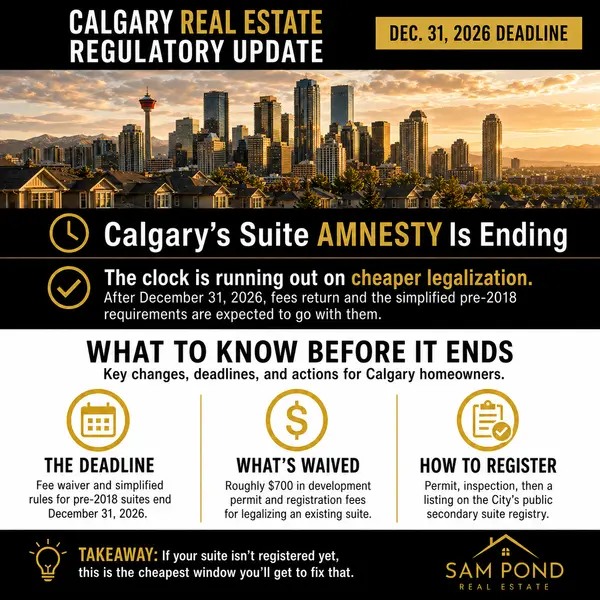
First, the City of Calgary's Secondary Suite Amnesty Program ends on December 31, 2026. That's about eleven weeks from now. The program lets owners of older suites legalize them by meeting only the minimum life-safety requirements, instead of full current code, and it waives a couple of fees along the way.
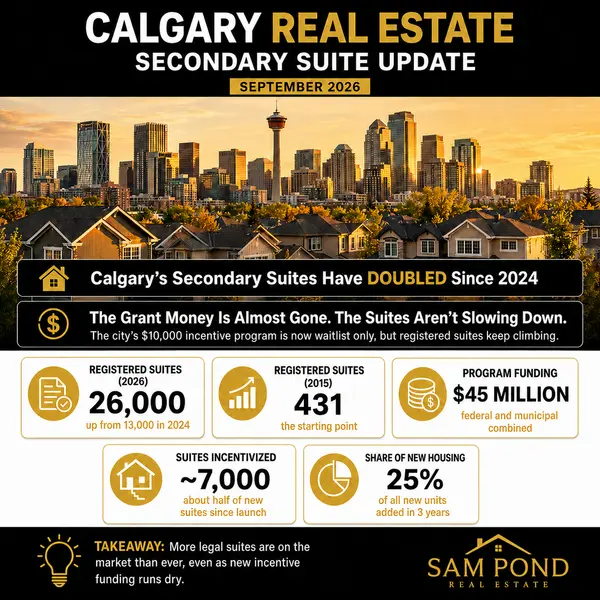
Second, the $10,000 grant that helped owners pay for safety upgrades is closed. The City's incentive page says it is no longer accepting new applications, and the City's suites page lists both the secondary suite and backyard suite incentive programs as closed as of September 28, 2026. If you were hoping a grant would soften the cost of fixing up an illegal suite, that door has shut for anyone who didn't already apply.
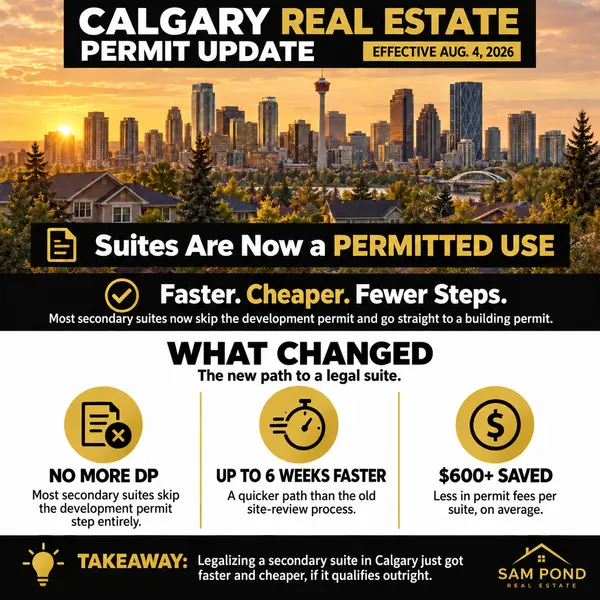
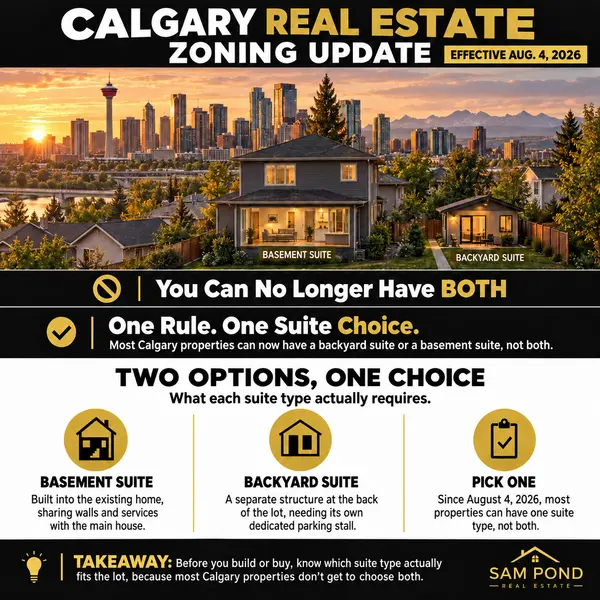
Third, since August 4, most basement suites in Calgary are a permitted use. I covered that in this post on what the permitted-use change means for legalizing. In plain terms, many owners can skip the development permit step and go straight to a building permit.
What the amnesty saves you, and what it doesn't
Let's keep this in perspective, because the deadline can make it sound bigger than it is. According to the City, the amnesty lets you avoid the development permit charge and the Secondary Suite Registry fee, and the City's current fee page lists both at $0 for legalizing an existing suite. Under the City's 2024 fee schedule, those were $497 and $244, so roughly $741 in savings.
The fees that still apply are the building safety approval ($205.92, which the City says takes about seven days) and the homeowner electrical and plumbing permits ($116.50 each) where the work needs them.
Now, if your house is one of the many that no longer needs a development permit because of the August change, the $497 waiver may not save you anything extra. So I'd treat the fee waiver as the small prize. The bigger prize is the lighter standard. To use the amnesty, the suite needs to have been built before March 12, 2018, and you only have to meet the City's minimum life-safety requirements. Once the amnesty is gone, a suite that needs legalizing may have to meet more of the current code, and that can mean more work and more cost.
The part nobody budgets for: the upgrades
The permit fees are the small number. The work is the real number. The City's guidance lists the typical amnesty upgrades as bedroom windows that meet size and escape requirements, protected openings near exterior exit stairs, smoke-tight drywall separation between the suite and the main home, interconnected hard-wired smoke and carbon monoxide alarms, and guardrails and handrails where stairs need them.
When the grant was open, it covered up to $10,000 for items like these. That money isn't there for new applicants, so every dollar is now coming out of the buyer's pocket, or out of the price you negotiate.
I spent about thirty years in engineering and design, so when I walk a suite I'm looking at the same things a Safety Codes Officer will. Window sizes and wells, ceiling heights, how the suite is separated from the main floor, where the exits are. I can't give you a quote from a showing, but I can tell you what to get a contractor to price before your conditions come off.
Here's what this looked like in my own family. My youngest son, Hunter, bought a home in Calgary in February 2025. The upstairs and downstairs were tenant-occupied, including the illegal basement suite, and the purchase required all tenants to move out by the end of April.
While we waited for them to leave, we applied to legalize the existing suite through the City's Amnesty Program, which it qualified for because the suite existed before March 2018, and we applied for the City's suite incentive program. Once the tenants moved out, work began in May and finished by the end of September 2025. The suite needed a few things. We had to remove the T-bar ceiling and replace it with a drywall ceiling to make it smoke-tight, and we needed alarms and interconnected smoke detectors. The house had a common entrance for the upstairs and downstairs, so we built a dedicated entrance for the basement suite and added a second furnace, both because they make managing the property easier down the road. Those last two weren't about passing inspection, they were choices. We ended up claiming the full $10,000 from the grant.
The part that matters most if you're about to buy one is the mortgage. Because the suite was illegal at the time, Hunter's lender didn't count any basement rent in his application, so the house had to stand on its own. That's what I'd tell you to plan for too. And notice the timeline. Even with the tenants out and a clear plan, it took about five months from start to finish, plus a couple of extras beyond the minimum. Keep that in mind as December 31 gets closer.
What it does to your mortgage math
This is where the legal and illegal suite split matters most. As the City notes, lenders recognize legal suites, which is what lets that rent help you qualify, and they aren't subject to enforcement action. I walked through how lenders count suite rent in this post on how a legal suite's rent counts toward your mortgage. Rent from an unregistered suite is a different story. My broker tells me the big five banks and larger mortgage-only lenders generally accept only legal suites, while a B lender or private money may consider an illegal suite, usually on different terms. So before you fall for a house on the strength of its suite income, ask your mortgage broker how they'd treat it today, not after the fact.
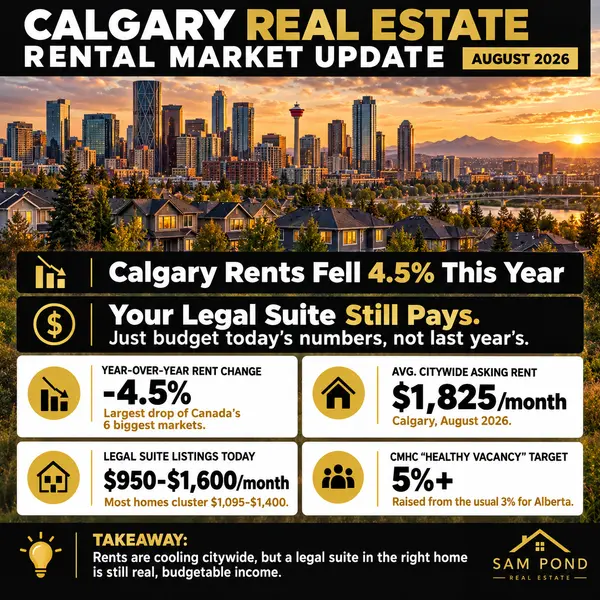
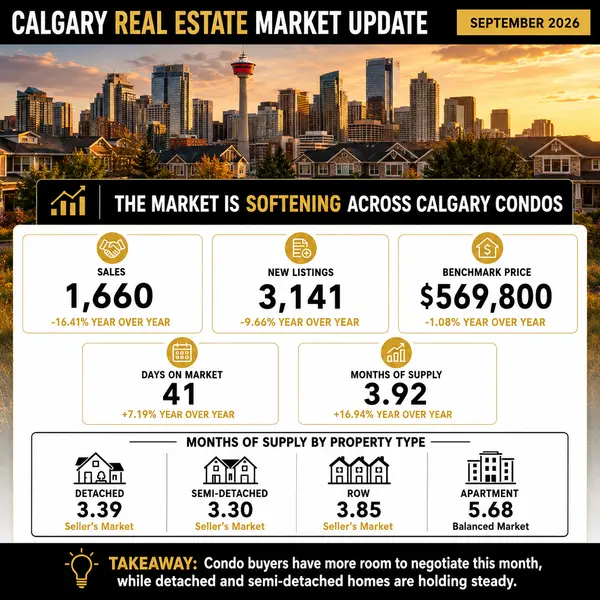
And be a little conservative on the rent side too. Suite rents are softer than they were a year ago, which I went through in this post on whether your legal suite still covers the mortgage.
How I'd approach the offer
My standing order of preference doesn't change. A home that already has a registered legal suite comes first. You can check any address on the City's Secondary Suites Registry at secondarysuites.calgary.ca. Legalizing an existing illegal suite is the second option, and it only makes sense if the price reflects the work.
If you are looking at an unregistered suite, here's how I'd think about it.
- Look at your possession date. The amnesty application involves a signed owner declaration, so the owner is the one who applies. If you don't take possession until after December 31, you've likely missed the waiver and the amnesty standard, as the program stands today. Council has extended it before, so another extension isn't impossible, but I wouldn't plan around it.
- Ask whether the seller will apply first. In some deals, it makes sense to ask whether the seller will start the process before closing. That's a conversation for you, your agent and your real estate lawyer.
- Get the work priced. Have a contractor inspect the suite during your conditions period, and make sure the offer price reflects their findings.
- Confirm the deadline details with the City. The City doesn't say whether December 31 is a deadline to apply or to finish, and its own page reads "Upgrade your unregistered suite by Dec. 31 and save." I'd plan to have the work done by then, and confirm with the City's Planning Services Centre at 403-268-5311. Also keep in mind the City lists 10 to 12 weeks for a development permit where one is still required.
- Talk to your mortgage broker first. Know what rent they will and won't count before you commit.
I'm an advisor, not a salesperson, so I'll say this plainly. Sometimes the right answer is to walk away from the house or choose a different house with a registered suite. That's a fine outcome.
Common questions
Can I buy a house with an illegal suite in Calgary?
Yes, it's legal to buy one. The risk sits with the owner, since an unregistered suite doesn't have the same standing with the City, lenders or insurers. Plan to legalize it, or price it as a home without a suite.
When does the Calgary suite amnesty end?
December 31, 2026. It waives the development permit and registry fees for eligible suites built before March 12, 2018, and lets them meet minimum life-safety requirements instead of full current code.
Is the Calgary secondary suite grant still available?
No. The City says the Secondary Suite Incentive Program is no longer accepting applications, and its suites page lists both incentive programs as closed as of September 28, 2026.
How do I check if a Calgary suite is legal?
Search the address in the City's Secondary Suites Registry at secondarysuites.calgary.ca. If it's listed, it's registered. Don't rely on the listing description, since "legal" and "legalizable" are very different things.
Will a lender count rent from an unregistered suite?
Usually not with the big five banks or larger mortgage-only lenders, which generally only accept legal suites. A B lender or private money may consider an illegal suite, on different terms. Ask your broker before you write an offer.
If you've found a suited house and you're not sure which side of this it falls on, I'm happy to look at it with you. You can call or text me at (403) 889-0913, or book a time in my calendar using this LINK.
For more on the basics, see my posts on illegal suites in Calgary, legal suites in Calgary and the amnesty from the homeowner's side.
This post is general education and not legal, financial, mortgage or construction advice. Rules, fees and deadlines change, so confirm current details with the City of Calgary, your lender and a licensed professional before making decisions.
Recent Posts