Calgary's Secondary Suite Amnesty Is Ending: What Homeowners Need to Know
Is Calgary's secondary suite amnesty program still around?
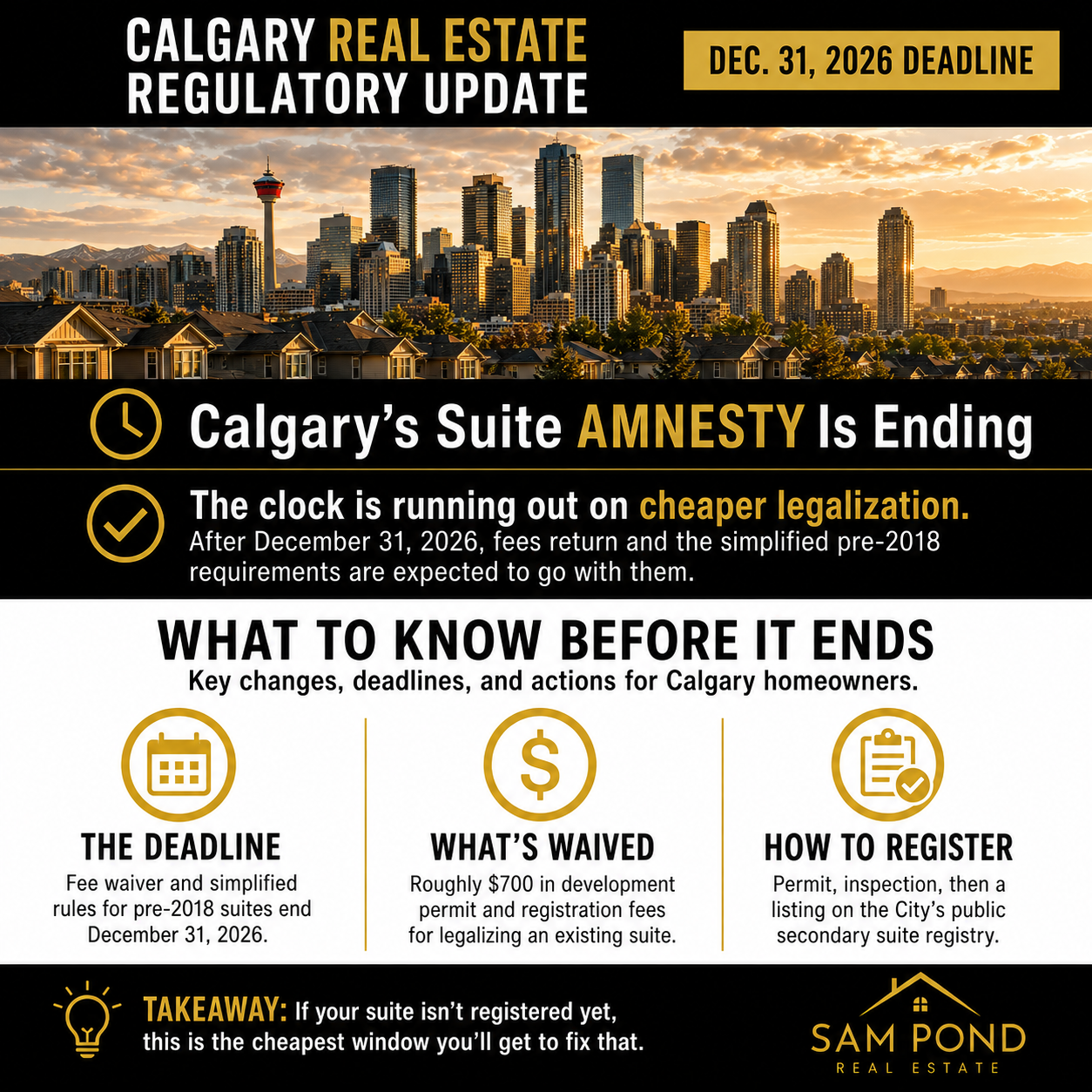
Yes, but not for much longer. The City of Calgary's Secondary Suites Amnesty Program, which waives development permit and registration fees to legalize an existing suite, ends December 31, 2026. That's about four months away as of this post. If you've got a suite that was never registered, this is the window to get it done before the process gets more expensive.
If you're first trying to figure out whether a suite is even legal in the first place, I've covered that ground here: Illegal Secondary Suites in Calgary: What Buyers Need to Know and Legal Secondary Suites in Calgary: What Buyers Need to Know. This post covers the deadline on top of all that.
What the amnesty actually covers
The amnesty waives the fees tied to registering an existing secondary suite with the City, roughly $700 in development permit and registration costs. It doesn't cover construction, and it doesn't mean anything goes. Your suite still has to meet real safety requirements: a proper egress window in every bedroom, interconnected smoke and carbon monoxide alarms between the suite and the main home, drywall fire separation between the units, a self-closing door on the mechanical room, and, if the stairs are the only exit, protected glazing on any windows facing them.
Here's the part that trips people up. If your suite was built before March 2018, you're only on the hook for those safety basics, not a full National Building Code retrofit. That's a meaningfully lower bar, and it's a big reason the amnesty exists in the first place. The City would rather have older suites registered and safe than sitting unregistered because full compliance is out of reach for most homeowners.
Why the deadline actually matters
After December 31, 2026, two things change. The fee waiver goes away, so you're back to paying standard development permit and registration fees. More importantly, that simplified pre-2018 pathway is expected to go with it, which means suites that qualify for the basic safety checklist today could face full code compliance instead. That could mean a new furnace, added noise mitigation, or other work that pushes costs well past what the amnesty currently requires.
If you own a home with an unregistered suite, or you're looking at buying one, the math is straightforward. Legalizing it before the end of 2026 is very likely cheaper and simpler than legalizing it in 2027.
How this is different from the Incentive Program
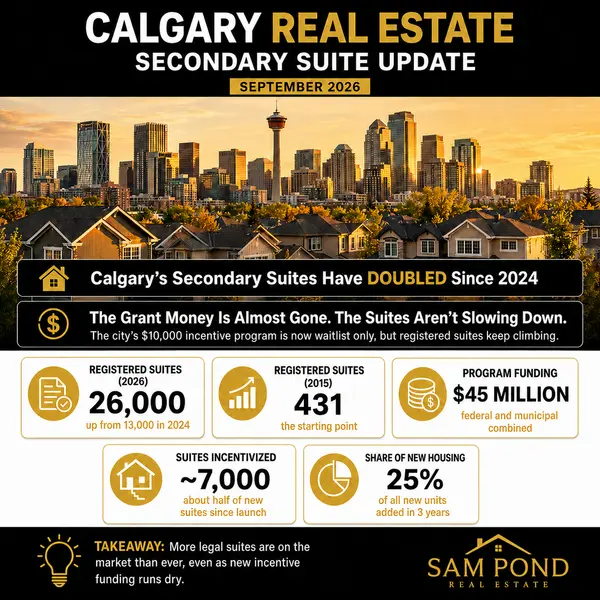
Worth separating this from a program with a similar-sounding name. Calgary's Secondary Suite Incentive Program (SSIP), which offers up to $10,000 toward building a brand-new suite, stopped taking new applications in June 2026 and is now waitlist-only, with the City saying funding may not stretch to cover late applicants. The Amnesty Program is a different thing entirely. It's not a grant, it's a fee waiver, and it's specifically for suites that already exist and just need to be brought up to code and registered. If your suite already exists but isn't legal yet, the amnesty is what applies to you, not the SSIP.
What registering actually involves
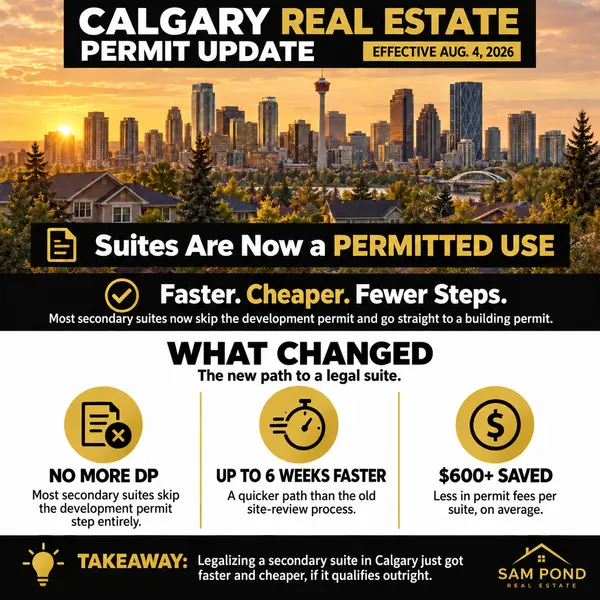
The process itself hasn't changed. You'll need a building permit, plus an electrical and plumbing permit for any related work, and a development permit if your suite doesn't fit current zoning as-of-right. The City gives you two ways to apply: a reduced-documentation option (an owner declaration, an info sheet, and photos of the entryway, kitchen, bathroom, mechanical room, and bedroom windows), or a full-plans option if you'd rather submit drawings. Either way, expect a framing inspection if there's structural work involved, then a final inspection once the suite is ready. Once you pass, you get a numbered sticker for the suite entrance and a listing on the public secondary suite registry, which matters to tenants and, down the line, to buyers.
Calgary's registry has grown fast because of programs like this, from roughly 13,000 registered suites in 2024 to about 26,000 today. That's real momentum, but it also means the City has less reason to keep subsidizing the process once it's confident most suites are getting captured.
Common questions
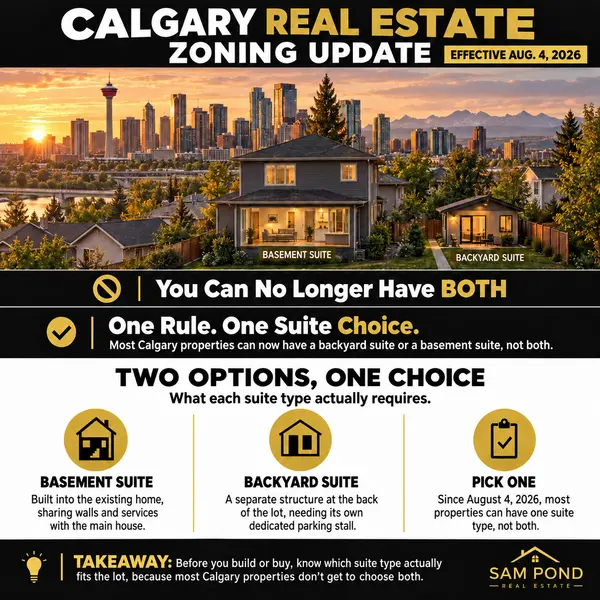
Does the amnesty cover backyard suites too, or just basement suites?
It generally applies to existing secondary suites, most commonly basement suites, but the same registration and fee-waiver rules apply to any existing secondary suite type built without permits.
What if my suite was built after March 2018?
You can still use the amnesty's fee waiver, but you won't get the simplified pre-2018 safety checklist. Your suite needs to meet the building code that applied when it was actually built.
Can I still apply for the SSIP grant if I register my suite under the amnesty?
Only if you were already on the SSIP waitlist from before applications closed in June 2026. New applicants aren't being accepted right now.
How long does the legalization process take once I apply?
It depends on your suite's condition and how complete your application is, but budget for inspections and a few weeks after the final inspection before your registry listing and sticker arrive.
Does a registered suite actually help at resale?
Yes. A legal, registered suite gives buyers, and their lenders, confidence the rental income is legitimate, which matters a lot if a buyer is counting on that suite to help qualify for their mortgage. I've written about that math here: Priced Out of Calgary? How a Basement Suite Increases Your Mortgage Approval.
If you're not sure whether your suite would qualify, or you're looking at a home right now and want to know if its suite is actually legal before you buy, that's exactly the kind of thing worth a conversation before you're stuck figuring it out after possession day.
This post is for general information only and isn't legal, financial, or construction advice. Suite legalization requirements can vary by property. Confirm your specific situation with the City of Calgary's Planning Services Centre or a qualified professional before making decisions.
Recent Posts