How Your Legal Suite's Rent Counts Toward a Calgary Mortgage
Will the rent from my suite actually help me qualify for a mortgage?
Yes, but it depends, mostly on whether the suite is legal, and on how your lender does the math.
Before we get into the numbers, I want to name the thing underneath this question, because it's usually not really about the math. It's "can I actually pull this off." A lot of the first-time buyers I work with have already told themselves ownership is out of reach on one income, and the idea of a suite covering part of the mortgage sounds almost too good to be true. So they either don't ask a lender about it at all, or they ask and get a vague answer that doesn't tell them what they actually needed to know. Let's fix that.
The rule most people don't know
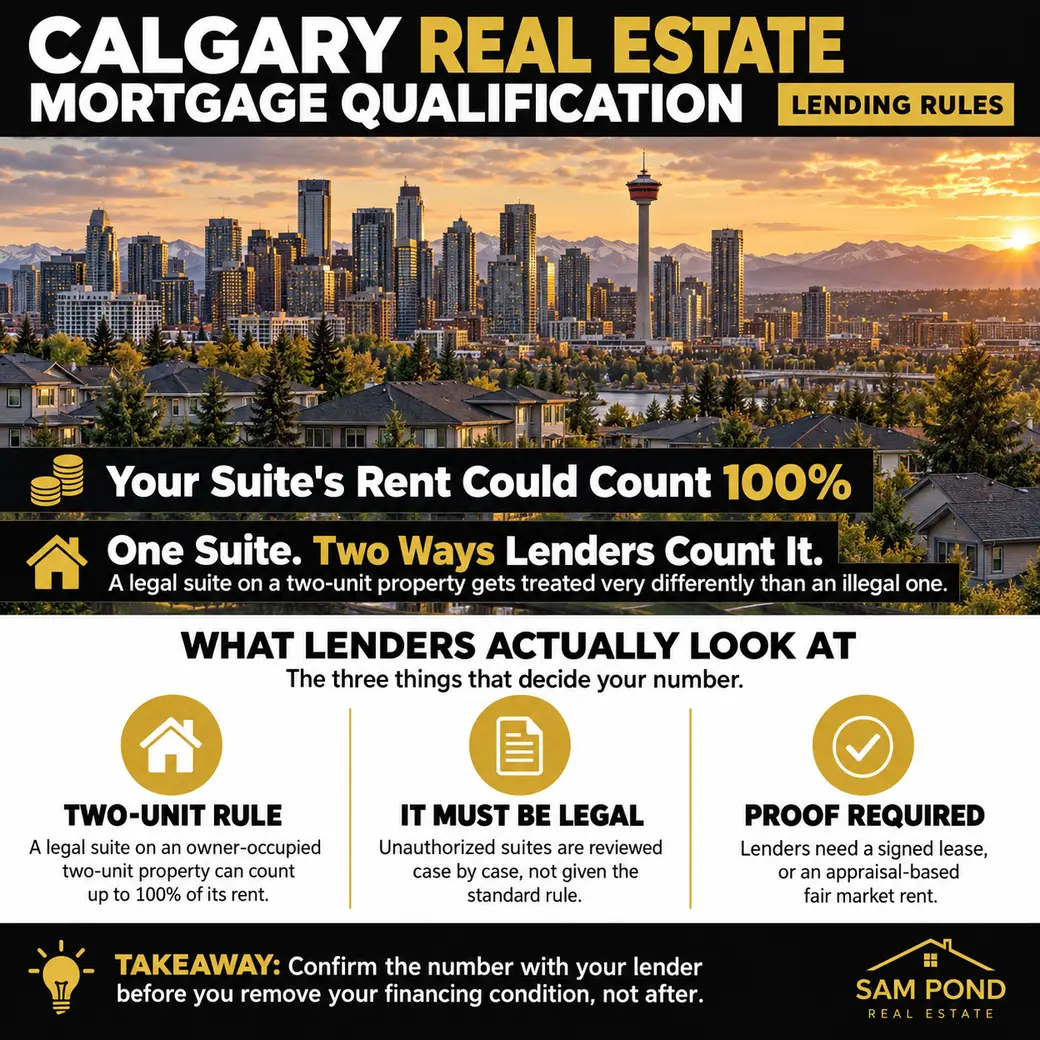
CMHC and Sagen, the two main mortgage insurers in Canada, will let a lender count up to 100 percent of the gross rental income from a legal secondary suite when you're buying an owner-occupied, two-unit property, meaning you live in one unit and rent the other. That's the whole house, one unit for you and one legal suite.
That's a bigger number than most people expect. The general rental-income rule people hear about, the one that gets repeated a lot online, is closer to 50 percent, and that's actually the rule for three or four unit properties, not the two-unit situation most of my buyers are in. If your realtor or lender is quoting you 50 percent on a house with one suite, it's worth double-checking that number with them, because it's likely leaving real qualifying power on the table.
Here's what that looks like with round numbers. Say the suite rents for $1,500 a month, or $18,000 a year. At 100 percent, a lender can add the full $18,000 toward the income they use to calculate what you can afford. At 50 percent, you'd only get credit for $9,000. Same suite, same rent, very different mortgage approval depending on which rule your lender applies and whether your property actually qualifies for the better one.
Why "legal" is the word doing all the work
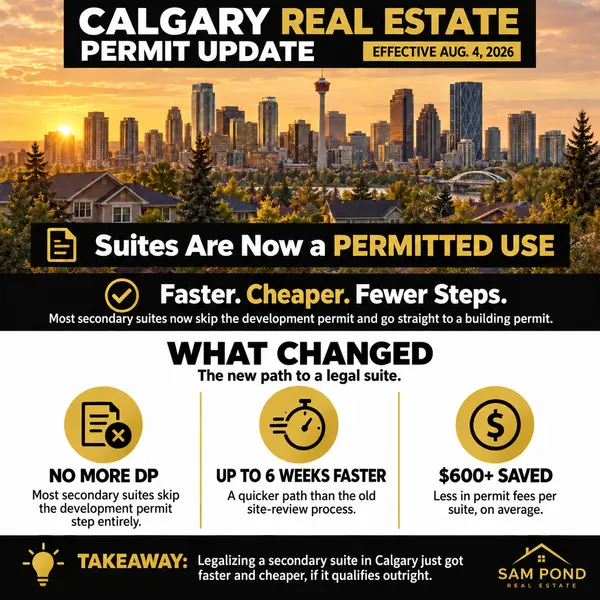
None of this works the way you'd want it to on an illegal suite. Lenders need the property to comply with the City's zoning and building bylaws, and an unauthorized suite gets reviewed case by case rather than receiving standard treatment. That's why I always guide buyers toward a home with an existing legal suite first, and toward legalizing an existing illegal one second. I don't suggest building a brand-new suite from scratch for a first-time buyer, that's a different project with a different risk profile. If you want the background on what actually separates a legal suite from an illegal one in Calgary, I wrote about that here: Legal Secondary Suites in Calgary: What Buyers Need to Know and Illegal Secondary Suites in Calgary: What Buyers Need to Know.
There's also a documentation step people skip. Your lender needs to actually see the rent, either through a signed lease if the suite already has a tenant, or through a fair market rent value from an appraisal if it's vacant or you're buying with the plan to rent it out. You can't just tell them what you think it'll rent for.
The part I'd tell any client directly
Confirm this with your mortgage broker or lender before you remove your financing condition, not after. I've seen buyers assume the suite income is locked in because it seemed obvious, then find out during underwriting that the lender needed something they didn't have, a lease, an appraisal, proof the suite is registered. That's a conversation you want to have with room to walk away if the numbers don't work, not once you're already committed.
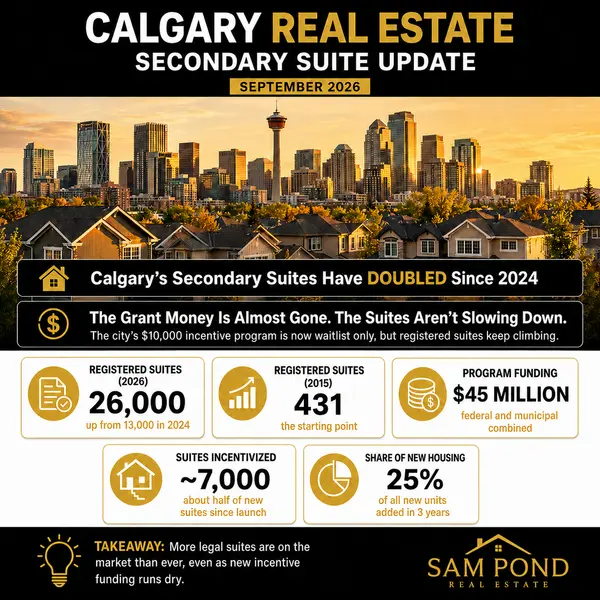
It's also worth knowing this ties into what's happening city-wide right now. Calgary has about 26,000 registered secondary suites as of this year, double what it was in 2024, so lenders are seeing a lot more of these applications than they used to. I wrote more about that trend here: Calgary's Secondary Suite Boom: What 26,000 Registered Suites Means for Buyers. If you're weighing whether a suited property is the right move for your family at all, How to House-Hack Your First Home in Calgary: A Guide for Families is a good place to start, and Priced Out of Calgary? How a Basement Suite Increases Your Mortgage Approval covers the affordability side more broadly.
Questions people actually ask me about this
Does an illegal suite still count toward my mortgage?
Not the same way. Lenders look at unauthorized suites case by case, and you can't count on the full 100 percent rule. Legalizing it first, or buying one that's already legal, gives you a much cleaner path.
Do I need a tenant in place to use the rental income?
No. A signed lease works if you have one, but a vacant suite can still qualify using a fair market rent value from an appraisal.
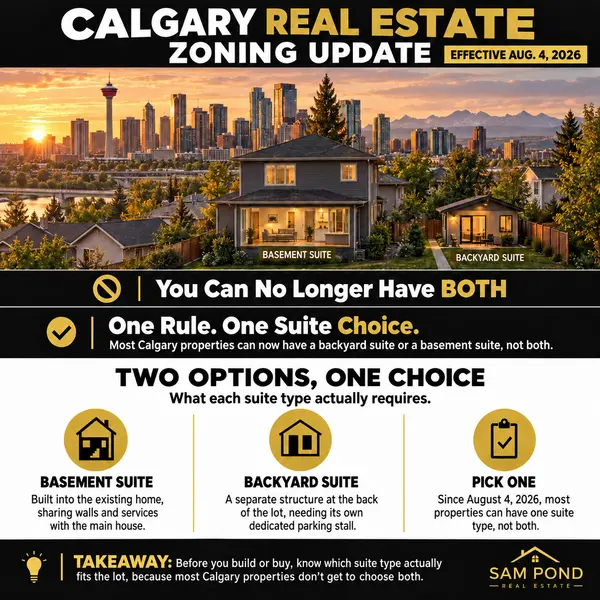
Is the rule the same for a basement suite and a backyard suite?
The 100 percent, two-unit rule applies to the property as a whole, not the suite type. What matters more is whether the suite is legal and properly registered.
Does this change if my income is on the lower side?
It can help more than you'd think. The added rental income shifts your debt service ratios in your favour, which is often the exact gap between "not approved" and "approved."
If you're trying to figure out whether a suited property actually pencils out for your situation, that's the kind of conversation worth having before you start touring homes, not after you've fallen for one.
This post is general education, not mortgage, financial, or legal advice. Suite eligibility and rental income treatment vary by lender and by property, confirm your specific situation with your mortgage broker and the City of Calgary before making a purchase decision.
Recent Posts